May 3rd, 2016

Recently, multiple studies have concluded that people with sleep apnea, a disorder that causes snoring, fatigue, and dangerous gaps in breathing at night due to throat muscles collapsing, are five times more likely to develop cancer. In fact, one of the studies found that people with the most severe forms of sleep apnea had a 65 percent greater risk of developing cancer of any kind.
Researchers believe this could be due to the body lacking enough oxygen, a condition known as hypoxemia. When people are deprived of oxygen, their bodies react by producing more blood vessels, which can feed cancer cells, and as a result cause tumors to grow and spread.
Approximately 28 million North Americans suffer from sleep apnea, with many cases going undiagnosed. This is due to most cancer patients not mentioning any sleep problems they experience unless their physician asks them.
Patients at Pioneer Dental who suffer from sleep apnea can be treated using continuous positive airway pressure (CPAP) therapy, which produces a stream of air to keep the upper airways open while you sleep. An oral appliance may be another option if CPAP therapy isn’t an option. If you have sleep apnea, Dr. Carl Meyers and our team will help you understand all of your treatment options, finding one that suits your needs.
If you think you may have sleep apnea, please give us a call at our West Bend, WI office to schedule an appointment.
April 26th, 2016

You have done a lot of work to get the perfect smile. You wore your Invisalign aligner trays and cared for your teeth, and now your treatment is done. You still need to take care of your teeth to keep your beautiful smile. Keeps these things in mind when you think about your oral care routine.
Retainers
Many patients do require a retainer after Invisalign treatment. This will be based on your unique situation. If a retainer is recommended by Dr. Carl Meyers, use it as directed. Retainers prevent your teeth from shifting back into their original position. You should also avoid hard, crunchy foods for the first couple of weeks as your teeth adjust. For younger patients, retainers are normally used until the wisdom teeth come in or are extracted.
Brushing and Flossing
Brushing and flossing must be part of your daily oral care. Flossing helps remove the plaque, which becomes tartar or calculus. This build up can lead to gingivitis and gum disease. Your gums may be more sensitive for a week or two after your orthodontic work is completed. A warm salt water rinse may relieve discomfort.
Your teeth may be slightly sensitive for a short time. They have been protected by your Invisalign aligner trays and now are fully exposed. You might want to try a sensitive toothpaste to get through the transition. Just ask; we will be glad to recommend the best type for your needs. If your teeth are stained, a professional whitening treatment can be considered.
Regular Dental Checkups
You still need to have regular dental exams. Professional cleanings and X-rays make sure that both your teeth and gums stay healthy so you can keep your teeth for life. If cavities or other problems are found, they can be taken care of quickly.
If you have any questions about how to care for your teeth after your Invisalign program, please ask our West Bend, WI team. We want you to keep your healthy smile and enjoy the results of your Invisalign treatment.
April 19th, 2016
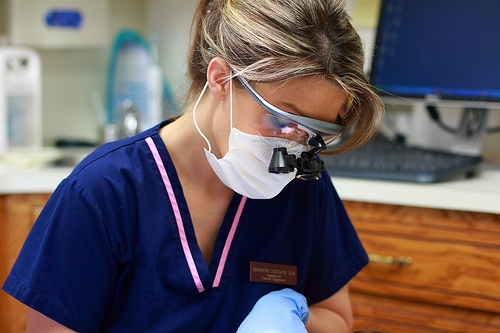
An article was released to the public stating that dental X-rays contribute to a type of brain cancer. After reading an article like this, your first thought may be to avoid dental X-rays, but you may want to hold off on that quick judgment. As with any treatment we offer at Pioneer Dental, education is your most valuable tool in deciding what is best for you.
How often dental X-rays are taken is based on risk for infection, physical symptoms, and clinical findings. The American Dental Association (ADA) is a governing body over the dental profession. The ADA states, “ . . . healthy adults receive routine mouth X-rays every two to three years. Dental X-rays are recommended every one to two years for children and every 1.5 to three years for teens. Children often require more X-rays than adults because of their developing teeth and jaws and increased likelihood for cavities.”
A "caries risk category" often determines how often dental X-rays are taken. The most recent documented resource to determine a caries risk is Caries Management by Risk Assessment (CAMBRA). This was adopted by the ADA and is used by dental professionals giving interval recommendations for X-rays.
With knowledge of your risk for dental infection, you will be informed by Dr. Carl Meyers of the interval at which dental X-rays should be taken. You can rest assured that the standards published by the ADA have been researched extensively and are there to protect your personal health and safety.
Dental X-rays are most commonly digital, which significantly reduces exposure. There is more radiation exposure from the sun or in an airplane than in a dental X-ray. It is common practice to use a lead apron with a thyroid collar for protection during X-ray exposure.
Having a cavity means having an active, potentially harmful infection. Diagnosing such infection with minimal exposure through digital dental X-rays at our West Bend, WI office does more good than harm.
April 12th, 2016

Many people suffer through headaches for years without getting to the root cause of their problem. If you find yourself constantly popping painkillers to get through the day, it might be worth a trip to see a medical professional – but it may not be the person you think.
Talking to Dr. Carl Meyers can be a great start when dealing with chronic headaches, because dental issues frequently contribute to head pain. In fact, the American Academy of Craniofacial Pain estimates that 80% of headaches are caused by muscle tension, which often originates in the jaws.
What Do Tension Headaches Feel Like?
A tension headache can originate on one side of your head or can pervade your entire skull. Typically, tension headaches feel like a dull, throbbing ache inside your head. Some patients at our West Bend, WI office report that they feel as though a metal band has been wrapped around their head and is causing significant pressure. Several common symptoms suggest that tension headaches may be caused by dental issues:
- Feeling as though your head or scalp is painful to the merest touch
- Experiencing a dull or throbbing pain behind the eyes
- Clicking or popping sounds in your jaw joints
- Grinding teeth or clenching the jaws, particularly in times of anxiety or during the night
- Feeling as though your jaw muscles are sore when you wake up from sleep
Dental Origins of Headaches
Several dozen muscles control your facial expressions, jaw movements, and motions such as swallowing. When these muscles are contracted for long periods of time, tension builds up within the muscle and can lead to headaches. This may happen if you clench or grind your teeth at night, your bite is misaligned, or you have muscle imbalances in the jaw or neck.
Dental Treatments for Tension Headaches
Fortunately, a trip to Pioneer Dental can be a fruitful way to alleviate your headaches, including the following treatments:
- Bite. In many cases, correcting your bite through orthodontics releases the stress on your jaw and muscles, and reduces the frequency of headaches.
- Nightguard. A nightguard, which resembles a sports mouthguard, may also be helpful if you frequently grind your teeth or clench your jaws during sleep. Nightguards distribute the tension from your clenched jaws and reduce the possibility of dental damage.
- Physical therapy and relaxation. Correcting the posture of your shoulders, neck, and head may alleviate muscle tension associated with headaches.